Requirements and Site
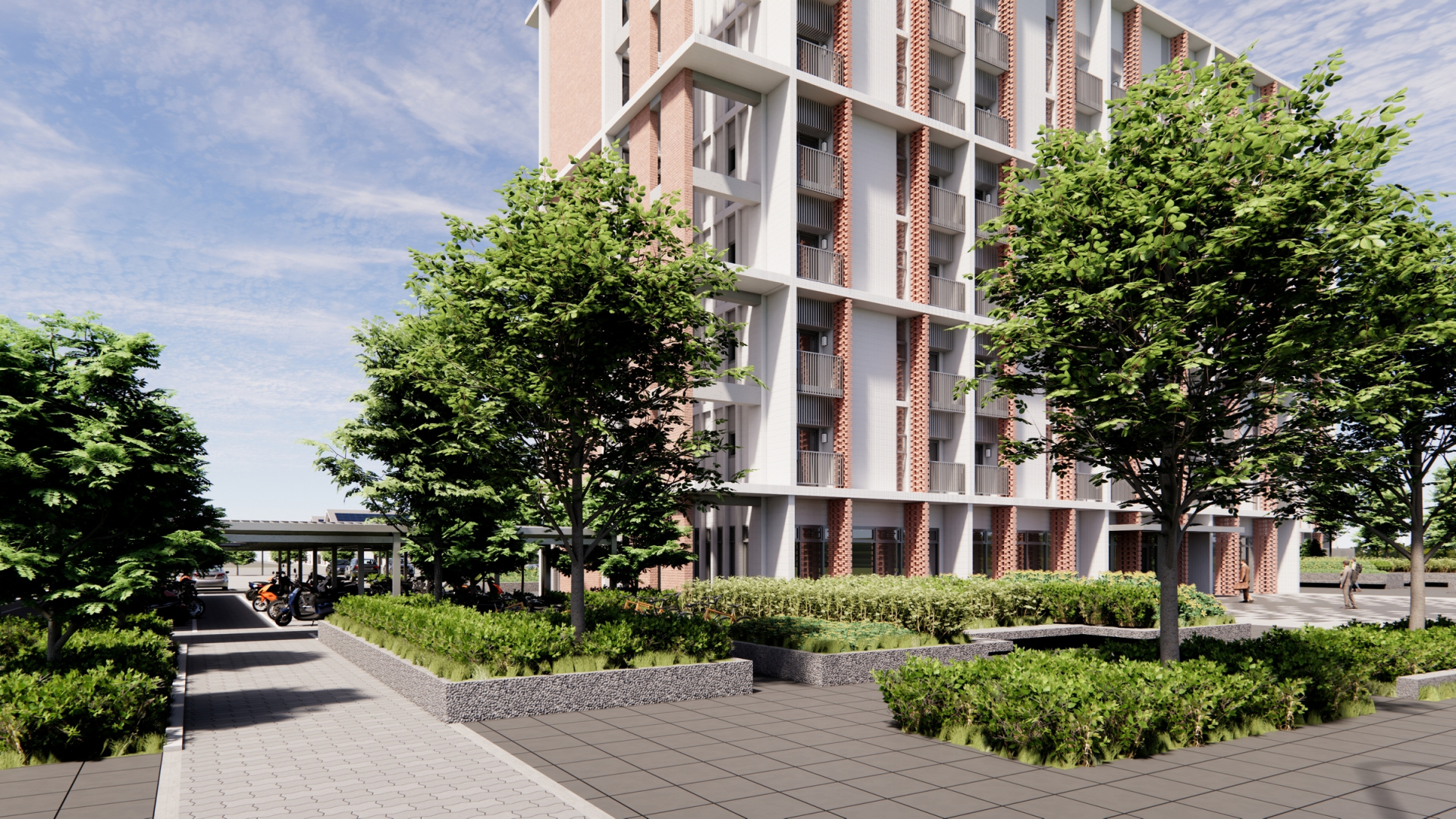
About 200 units for singles, and equal amount of motorcycle and car parking. Landscaping of the site shall comply with an extensive detention basin of the Park that neighbors its west boundary.
Layout
Dictated by comprehensive plan, a 15 meter setback shall be provided to its north facing Anju Road, which shall also provide detention function as well as natural touch.
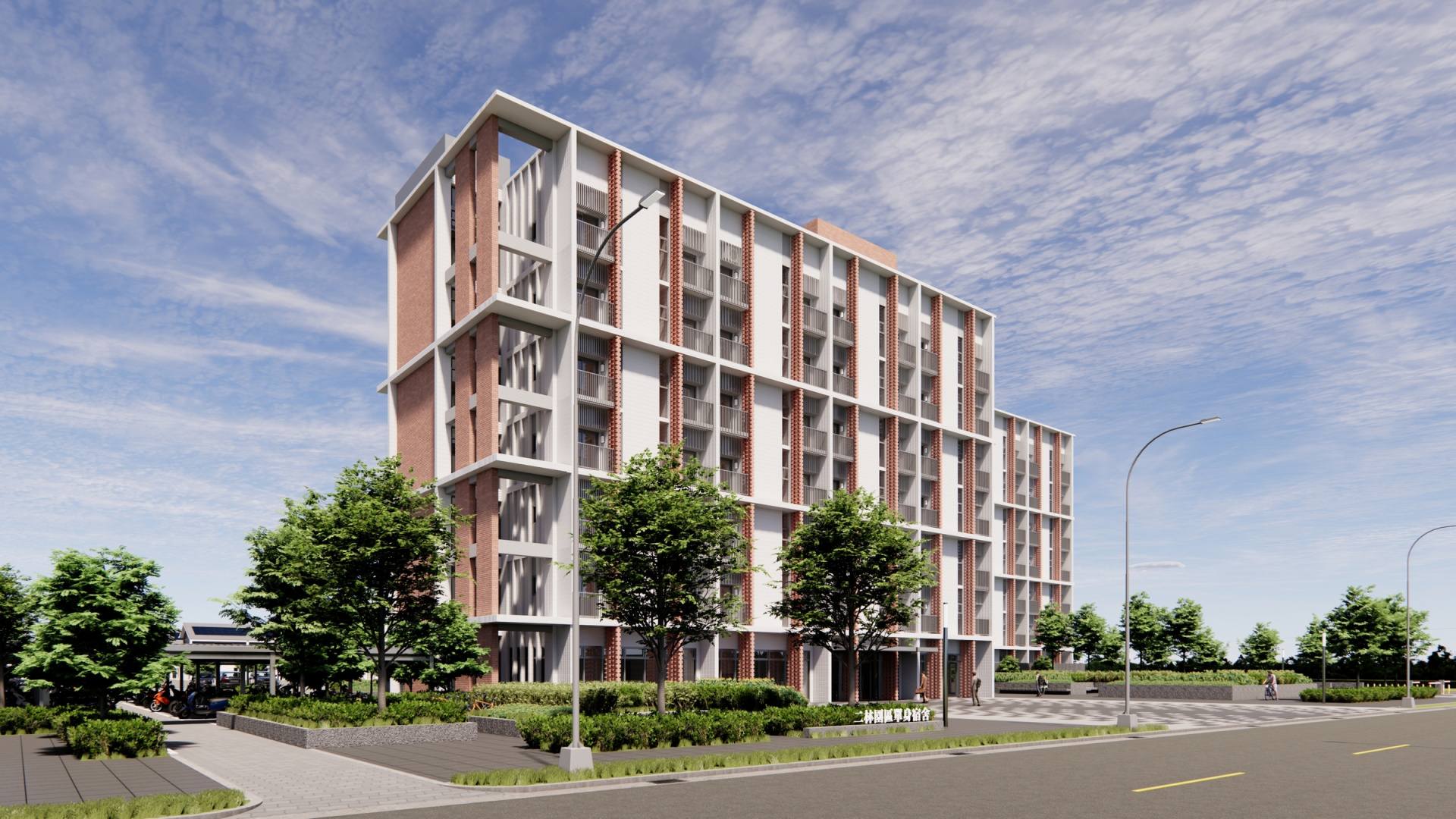
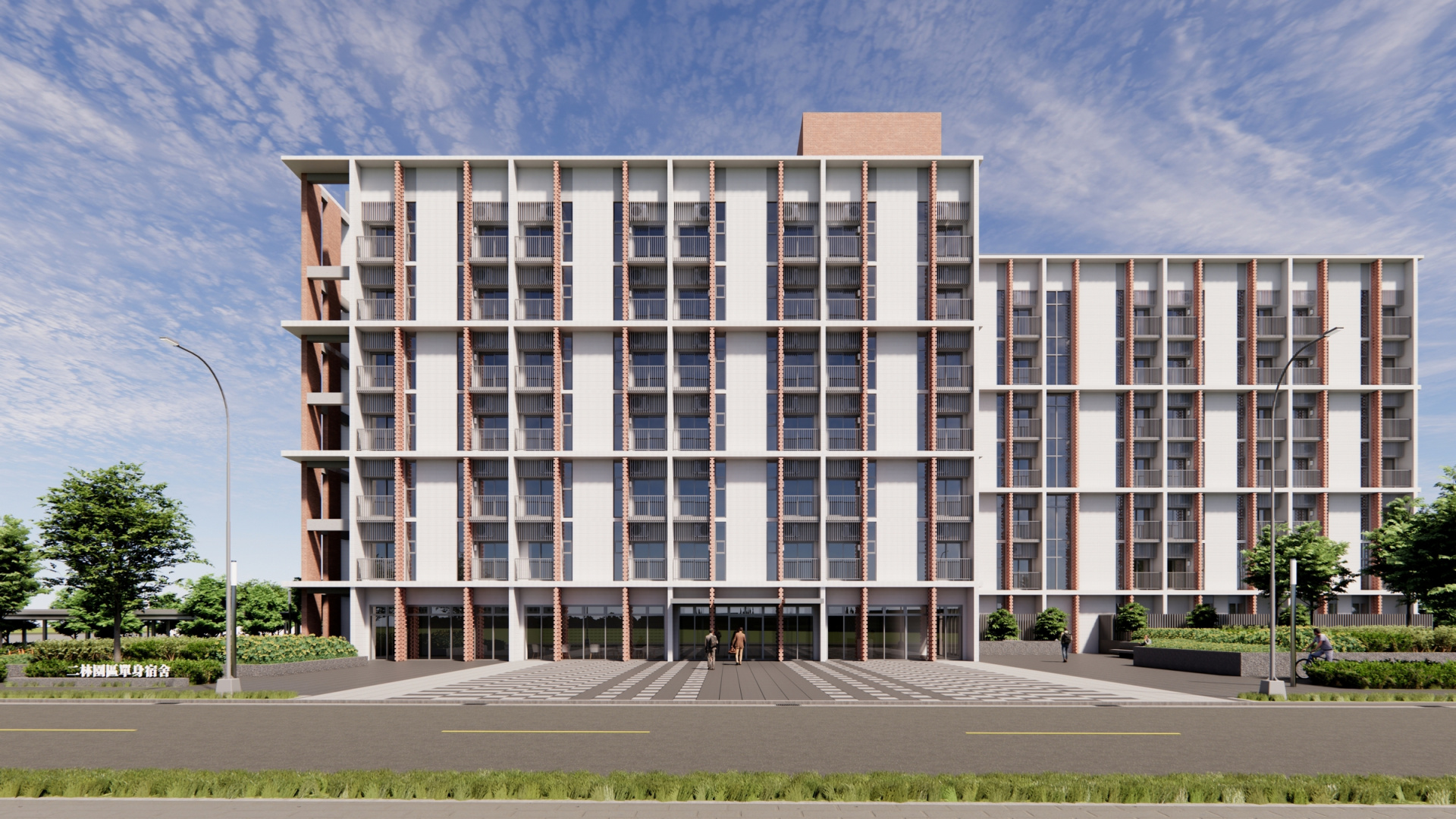
The massing is a Z-shaped layout, with north and south wing connected by service core in between. An entry plaza is provided for outdoor activities at northeast corner while car and motorcycle entry is at northwest corner.
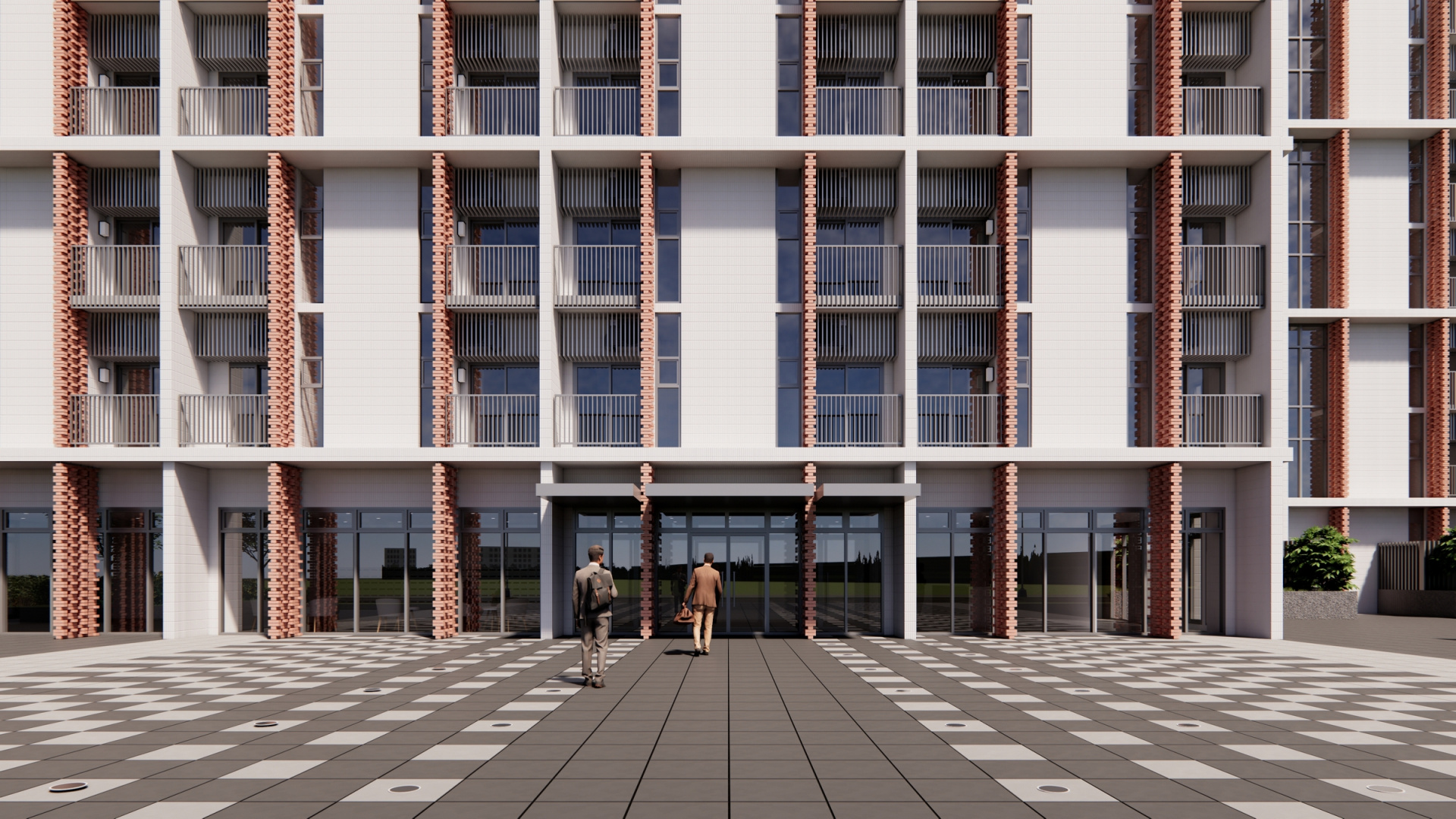
Residential unit is about 26㎡, each with its own balcony and bathroom. Bathroom is partitioned with glass and curtain to provide flowing space and privacy.
Public spaces meet designated and improvisational uses, so as to promote interaction and sense of belonging.
Image and Concept
The Design refers to essence of architecture tradition that includes the following: tectonics and decoration from traditional Fukien, east and west from Japanese Colonial, abstract and figurative from Modernism, and contrast of minimum and maximum of hi-tech age.
A 20 cm thick concrete framework is cantilevered from main structure for the infill of brick and aluminum screen walls. A 7-story high brick screen walls at main entry is a main feature that provides monumentality. Brick walls are also used in between unit balconies. On east and west ends of residential wings, aluminum louvers provide ventilation and screening air condition units. Balcony is faced with dark glass, that is contrast with brick in materiality.